

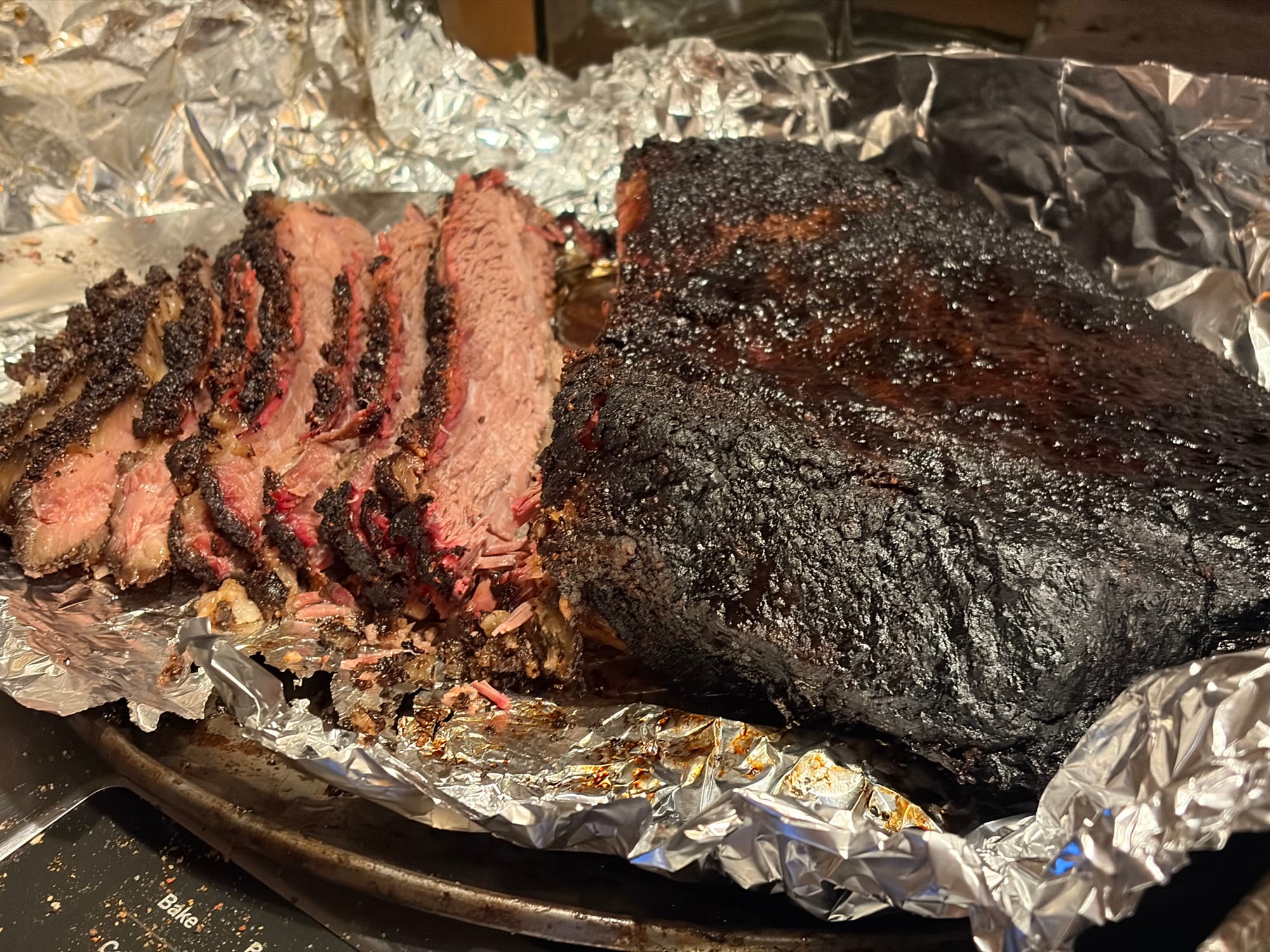
Today is the 14 year anniversary of the first beef brisket I ever cooked.
It was good. It wasn't great. I would like to think that I eventually found great, far from Texas.
It started with a coworker at the time named Adam. He was the one who pointed me toward the Big Green Egg, after an inexpensive Char Broil barrel that got me into the game. Adam was also the one who told me, with the confidence of a man who had learned this the hard way, that when you think you've used enough black pepper, to use more pepper.
I did not fully absorb that memo.
That first brisket came off a Medium BGE, seasoned with what I now understand to be restraint bordering on negligence. It was fine. It had the right idea. But there's a version of every craft where you know what good looks like before you know how to make it, and that cook lived in that space. Adam would probably not describe us as anything but BBQ peers these days.
Fourteen years of cooks later, through that Big Green Egg, now a Primo Oval XL that still lives on my patio, a Pit Boss 850 Pro that earned its retirement, and now its replacement, a RecTeq Deck Boss 800, I put a 19.64 lb CostCo packer on the smoker at 10pm on a Friday night and pulled finished brisket at 8:30 the following evening. Twenty two and a half hours from fire to table.
The Cook
USDA Choice from Costco. Kirkland packers are consistent and well-trimmed for the price. There's no shame in the source when the cook is right. Bonus that Instacart brought it to me and I did not actually need to brave Costco.
Seasoning was Meat Church Holy Cow, applied with what my wife would describe as an unreasonable amount of confidence. I've made my own rubs before and I'll make them again, but Holy Cow is a completely reasonable commercial rub and I'm heavy-handed with it by design. The lesson Adam tried to teach me fourteen years ago has since been fully internalized.
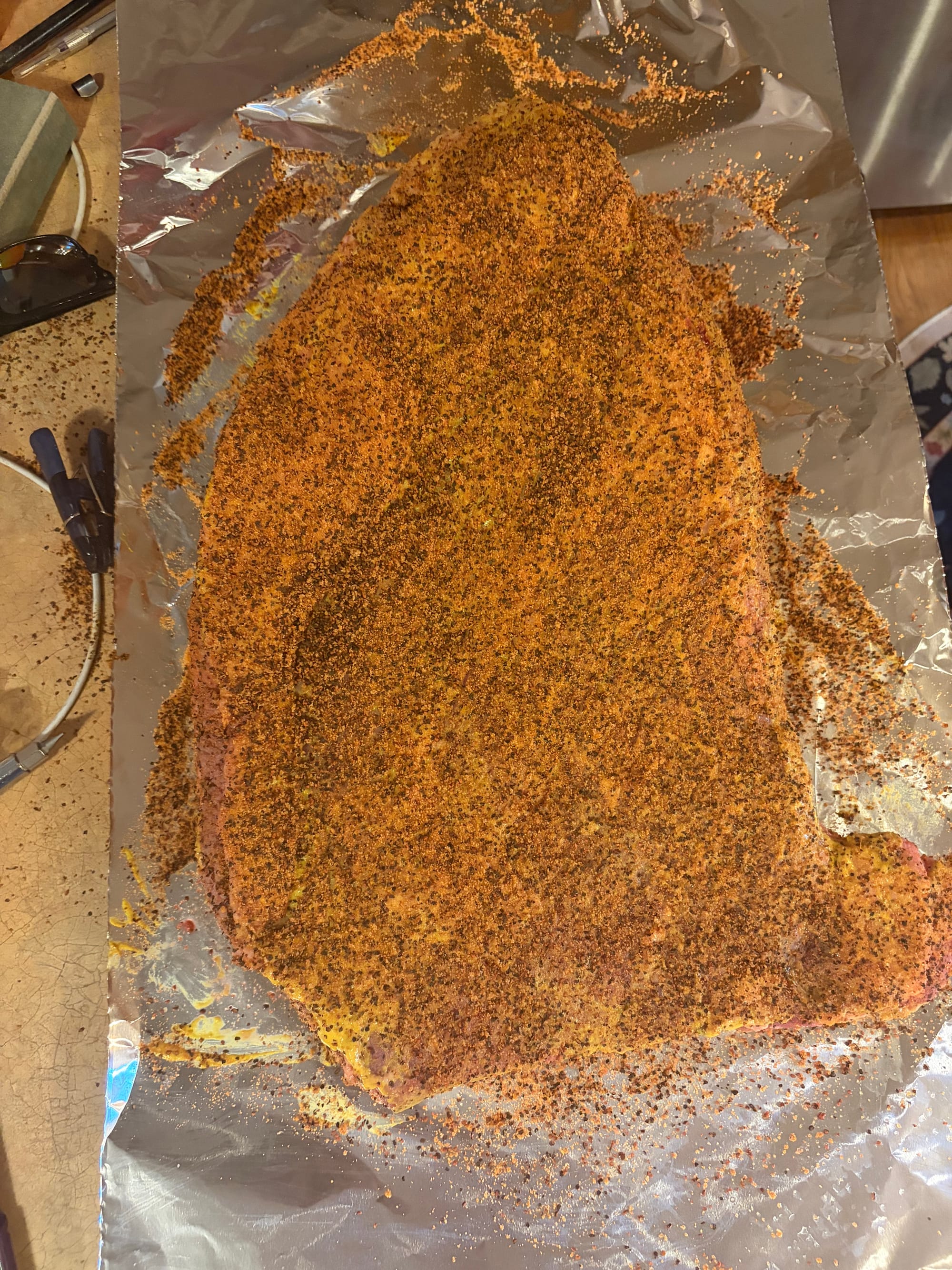
The RecTeq went on at 9pm to preheat to 220°F. Meat went over the fire at 10pm.
I ran it at 220 through the night and into the morning, through my Iron City Men's Breakfast, which it held down without complaint.
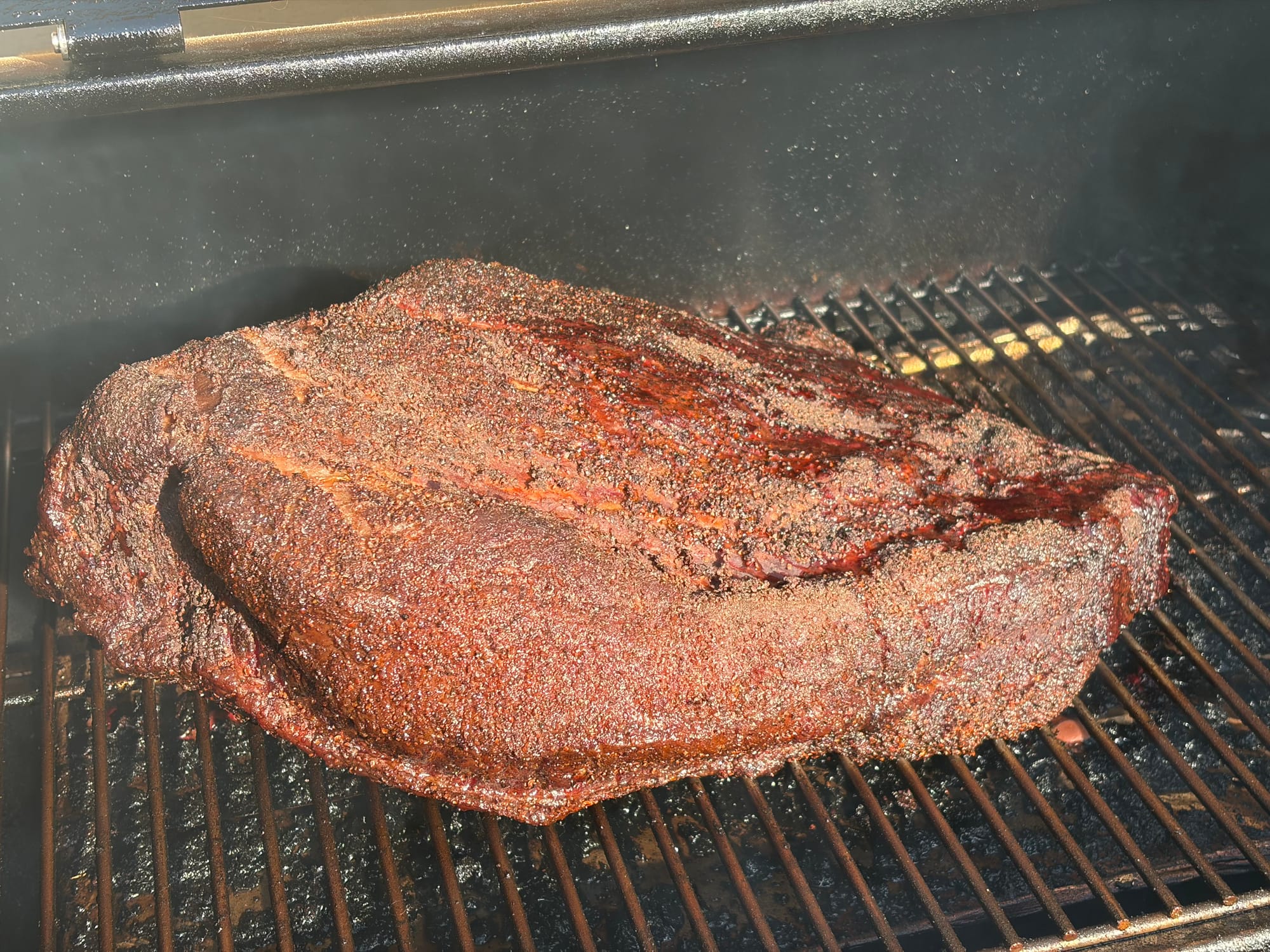
When I got back I bumped it to 250 and ran it there through most of the afternoon while my wife and I knocked out errands: Lowe's, Tractor Supply, Warren Family Garden Center and Nursery. The kind of Saturday that a long brisket cook makes possible, because the smoker doesn't need you.
Late afternoon I bumped it again to 275 to bring it home.
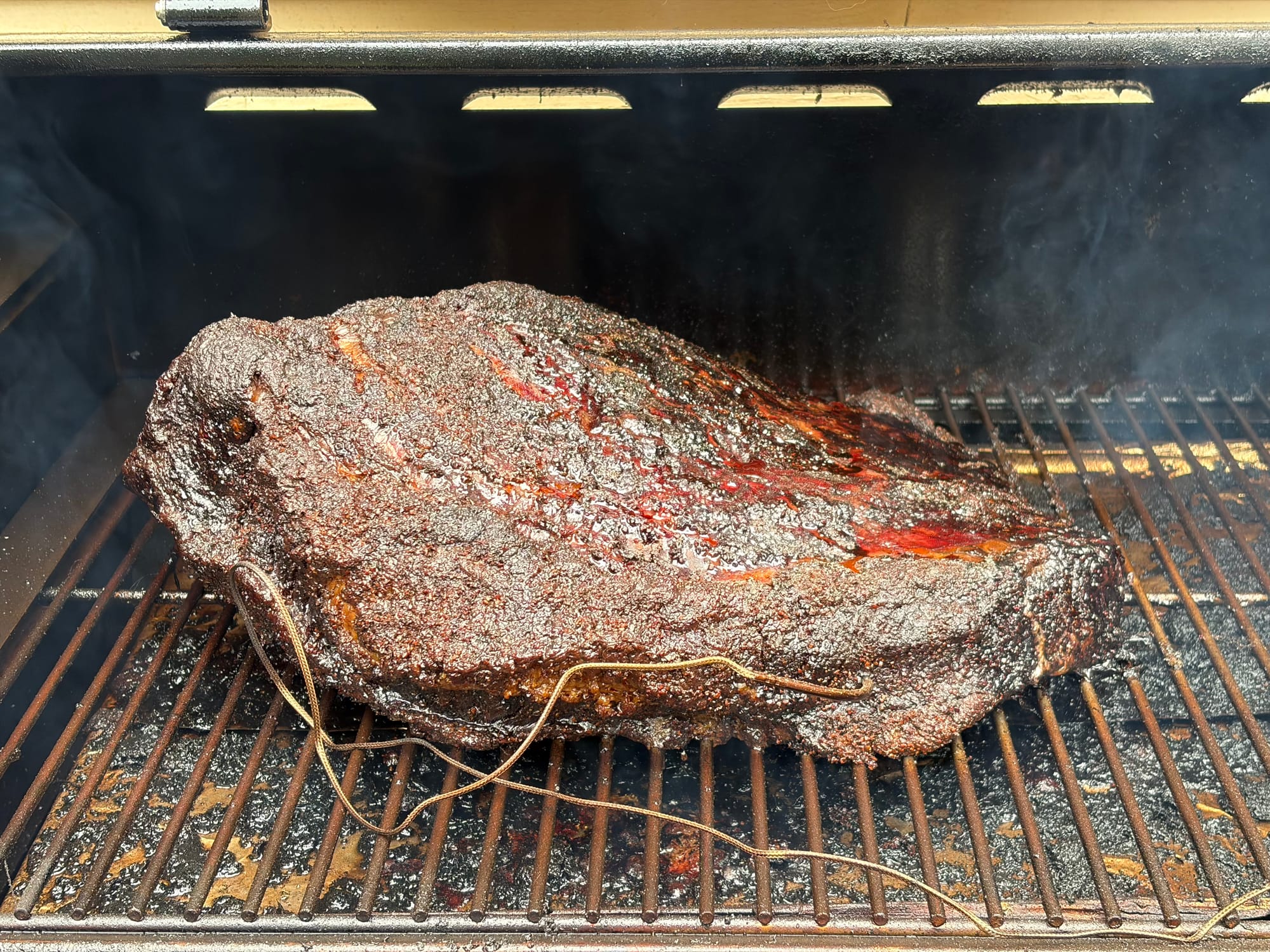
I had fully intended to wrap in butcher paper once the bark set. Standard Texas crutch, pull it through the stall, protect the bark, finish faster. But when I checked and the bark was exactly where I wanted it, the internal temp was already pushing into the 190s. The brisket had made its own decision. I let it ride unwrapped to the finish, which is the right call when the cook tells you to make it.
Pulled at 6:30pm. Let it rest briefly, then butchered at the deckle, separating the flat from the point. The flat got wrapped in butcher paper and dropped into a preheated Yeti Roadie to hold. The point got cubed.
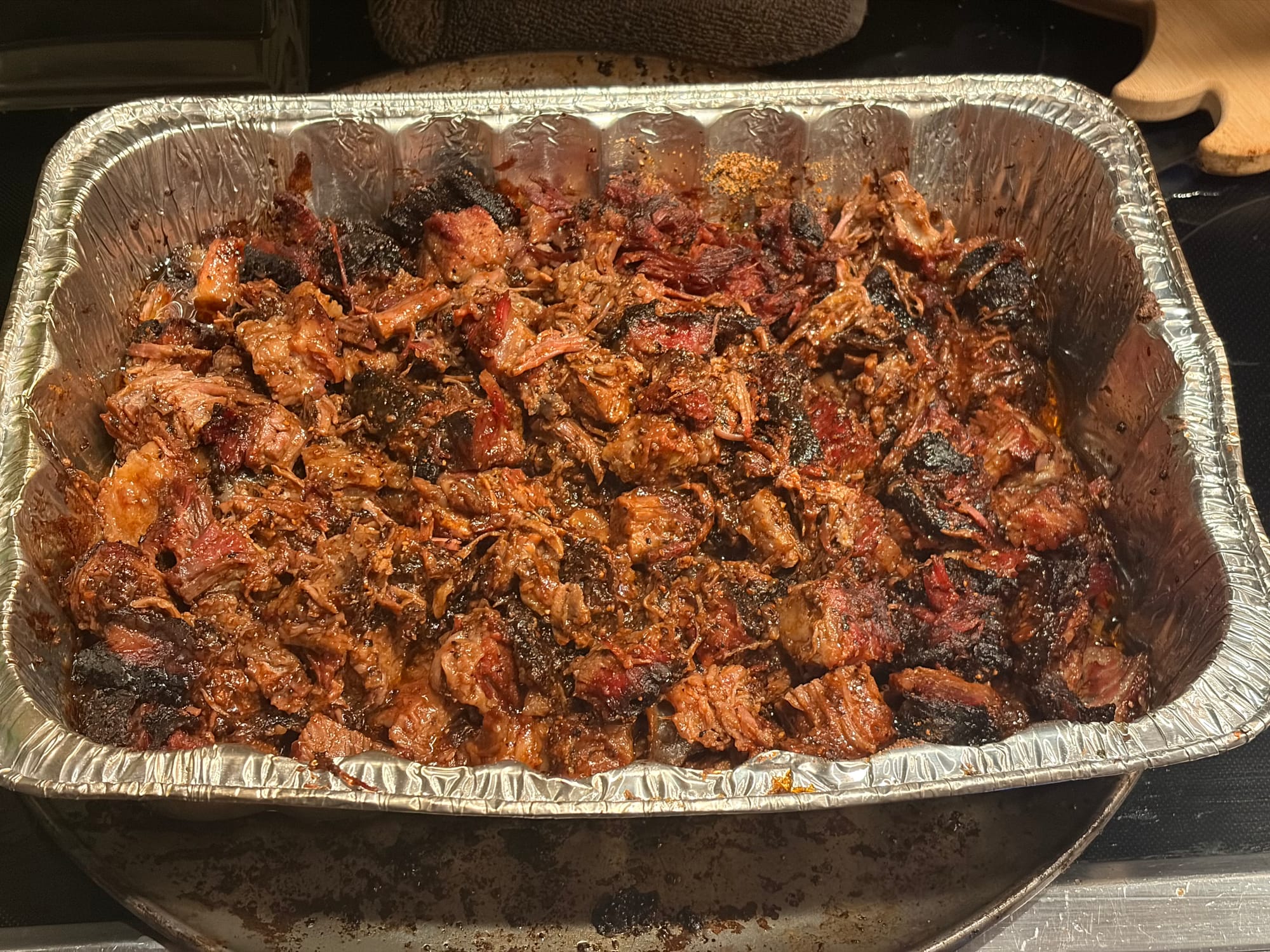
Burnt ends: more Meat Church, sugar-free BBQ sauce, stirred and back over 275 in an aluminum pan for an hour. Then that pan went into the Yeti on top of the wrapped flat, lid closed. The residual heat from both cuts held everything perfectly until we pulled it all to serve at 8:30pm.
The Result
Good bark. Classic Texas brisket flavor, beef forward, pepper-driven, smoke present but not aggressive. The burnt ends were exactly what burnt ends are supposed to be: caramelized, slightly crispy on the edges, falling apart in the middle, the kind of thing that disappears before anything else on the table.
The flat held its moisture through the long rest, which is where the Yeti cooler earns its keep. A proper rest is not optional. It is part of the cook.
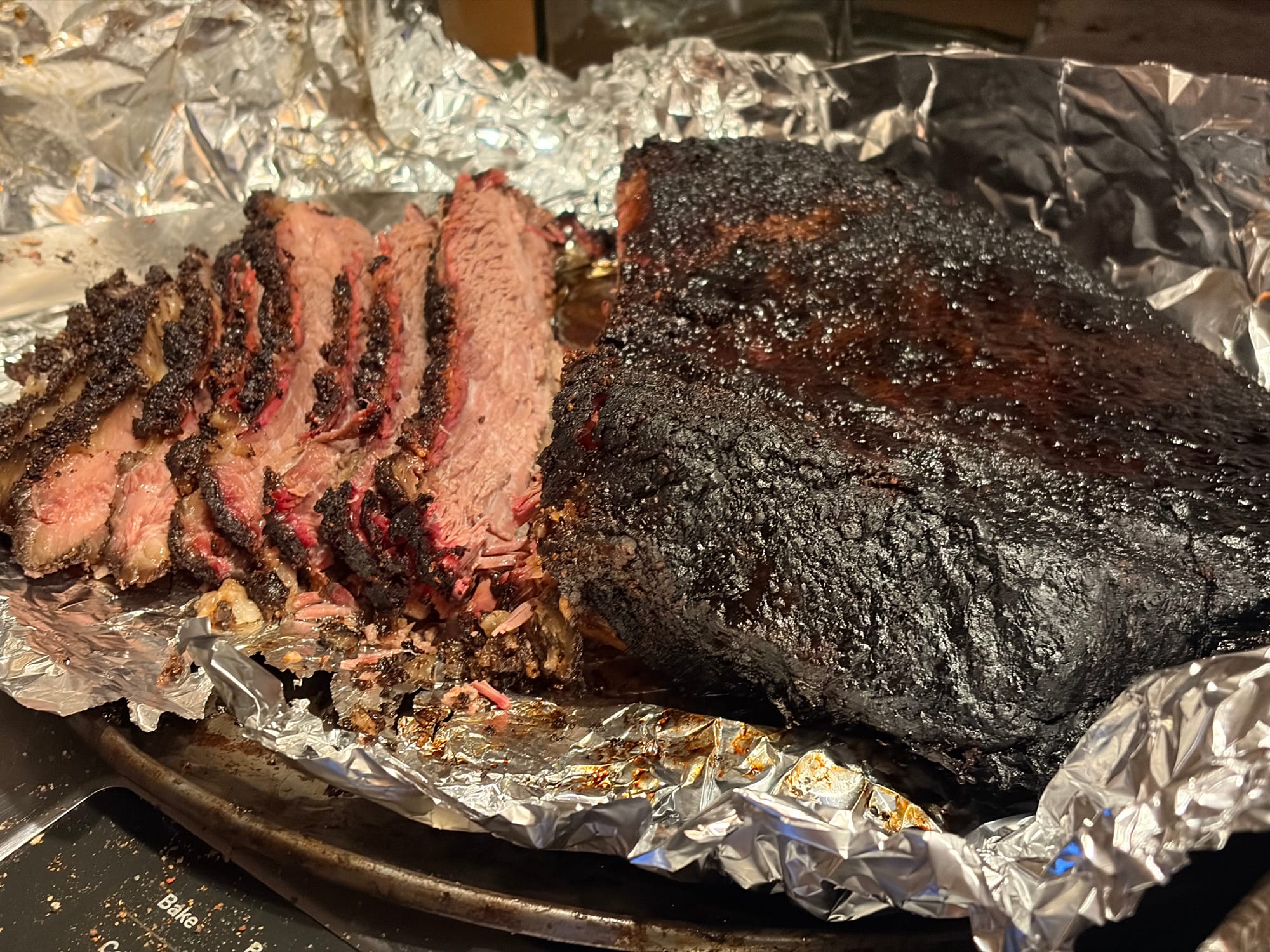
Fourteen years ago I pulled a brisket at 195°F because someone told me that was the number. Today? Temperature is data. When the probe goes in like butter, the brisket tells you it's time.
Some things take time to learn. Some things take 22 1/2 hours, give or take 14 years.
Cooked on a RecTeq Deck Boss 800. Seasoned with Meat Church Holy Cow. Rested in a Yeti Roadie. Served in Irondale, Alabama.